The Dance of the Mechanic
(Ο Χορός του Μηχανικού: O Chorós tou Michanikoú)
split-screen film essay -/+ 12 minutes
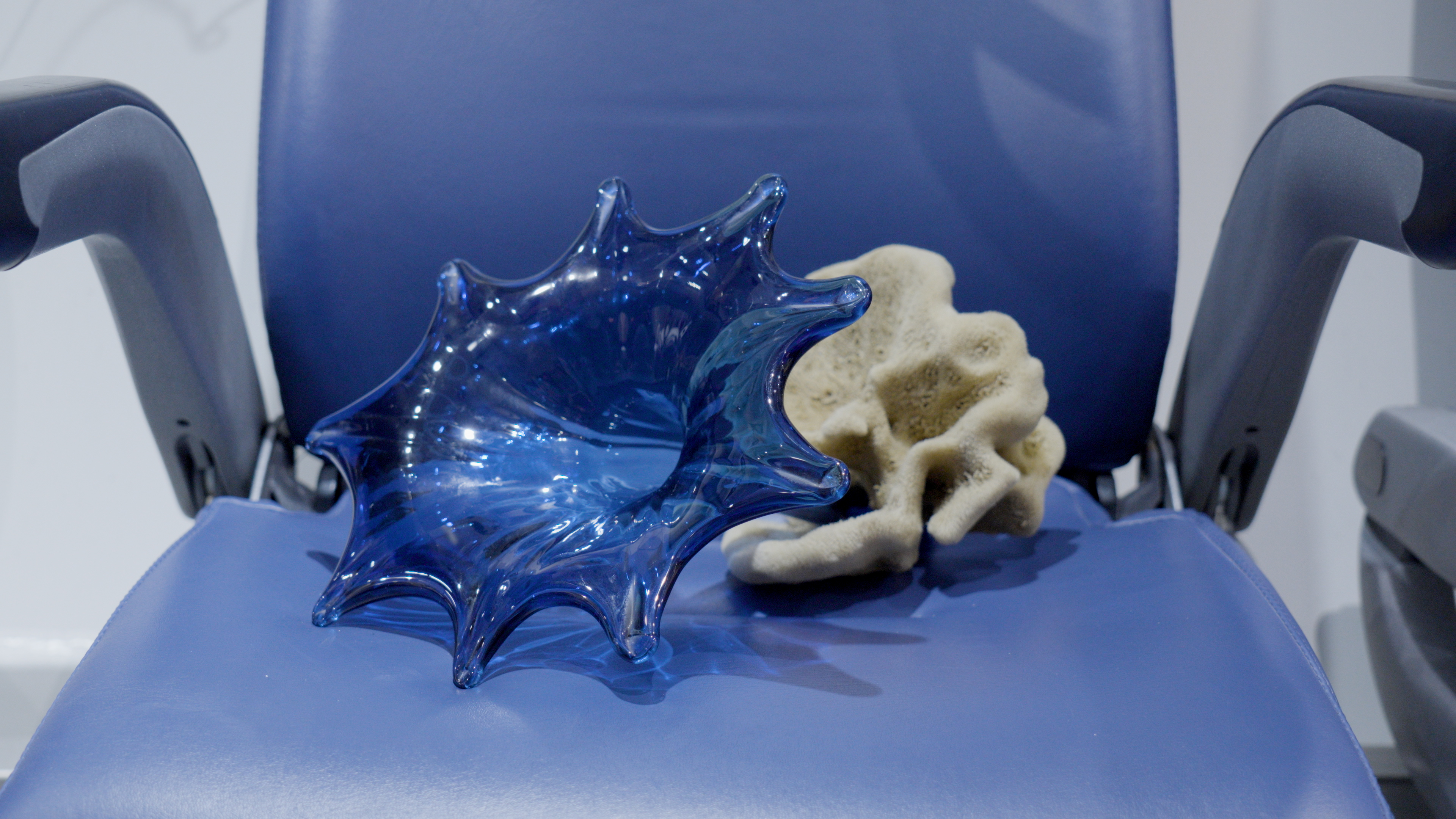
installation: ceramics, copper piping, textile (silk, cotton, traditional embroidery from Greece, polyester), natural sponges, marble.
Supported by Amsterdams Fonds voor de Kunst (AFK) and het Mondriaan Fonds.
Exhibitions:
22 september 2026 - Leiden Essay Film Festival
27-29 march 2026 - Mondriaan Prospects 2026
24-26 october 2025 - De Bouwput Amsterdam (work in progress)
25 may 2025 - ISO Official Afterparty Art Week Amsterdam // Open Studios (work in progress)
Synopsis
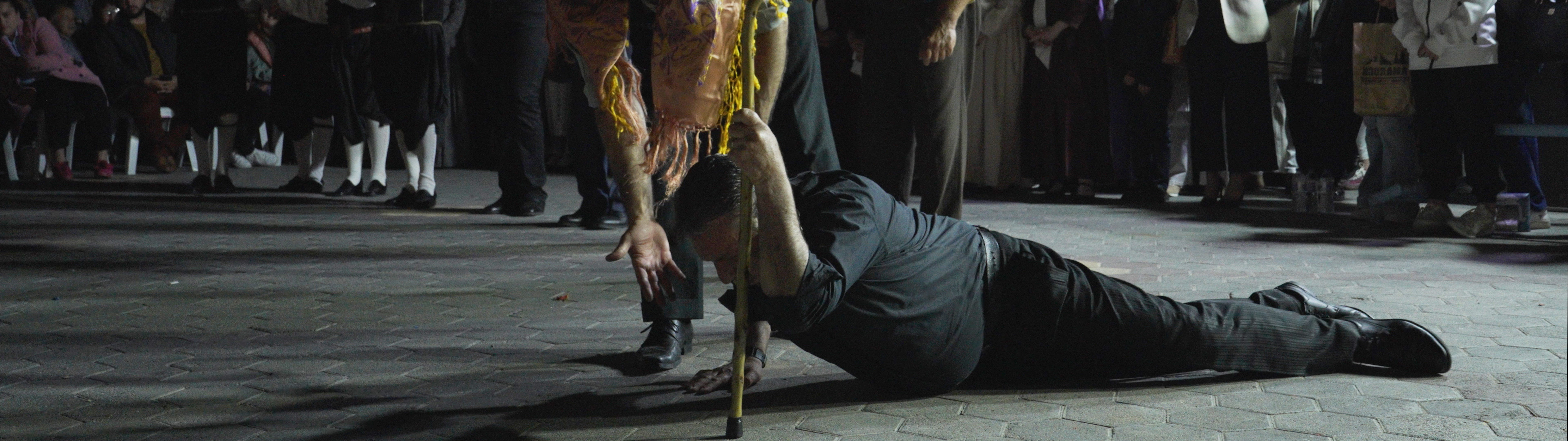
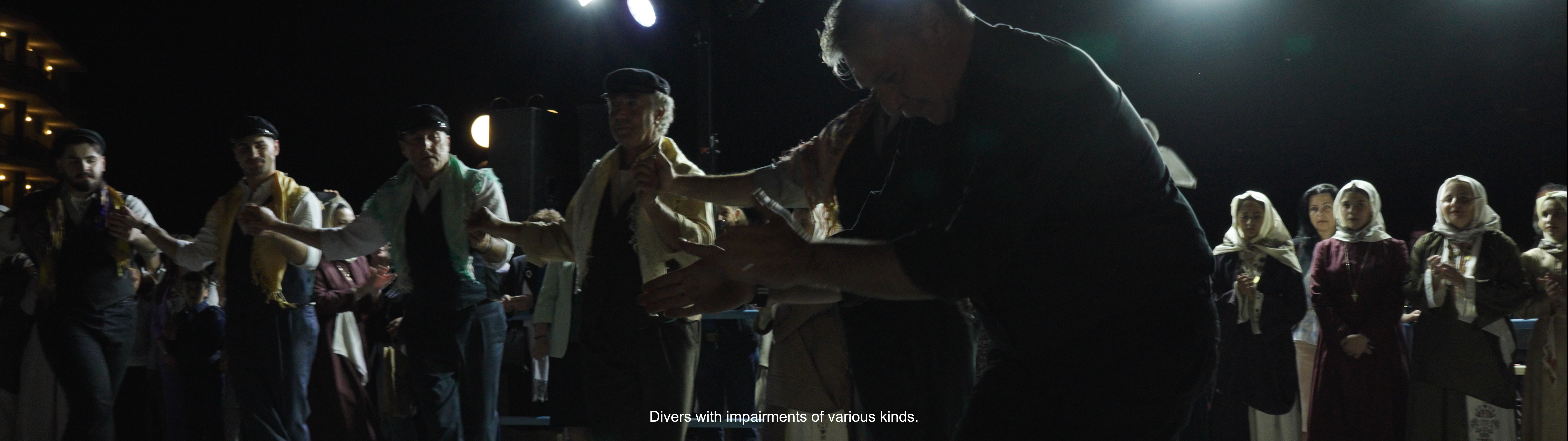
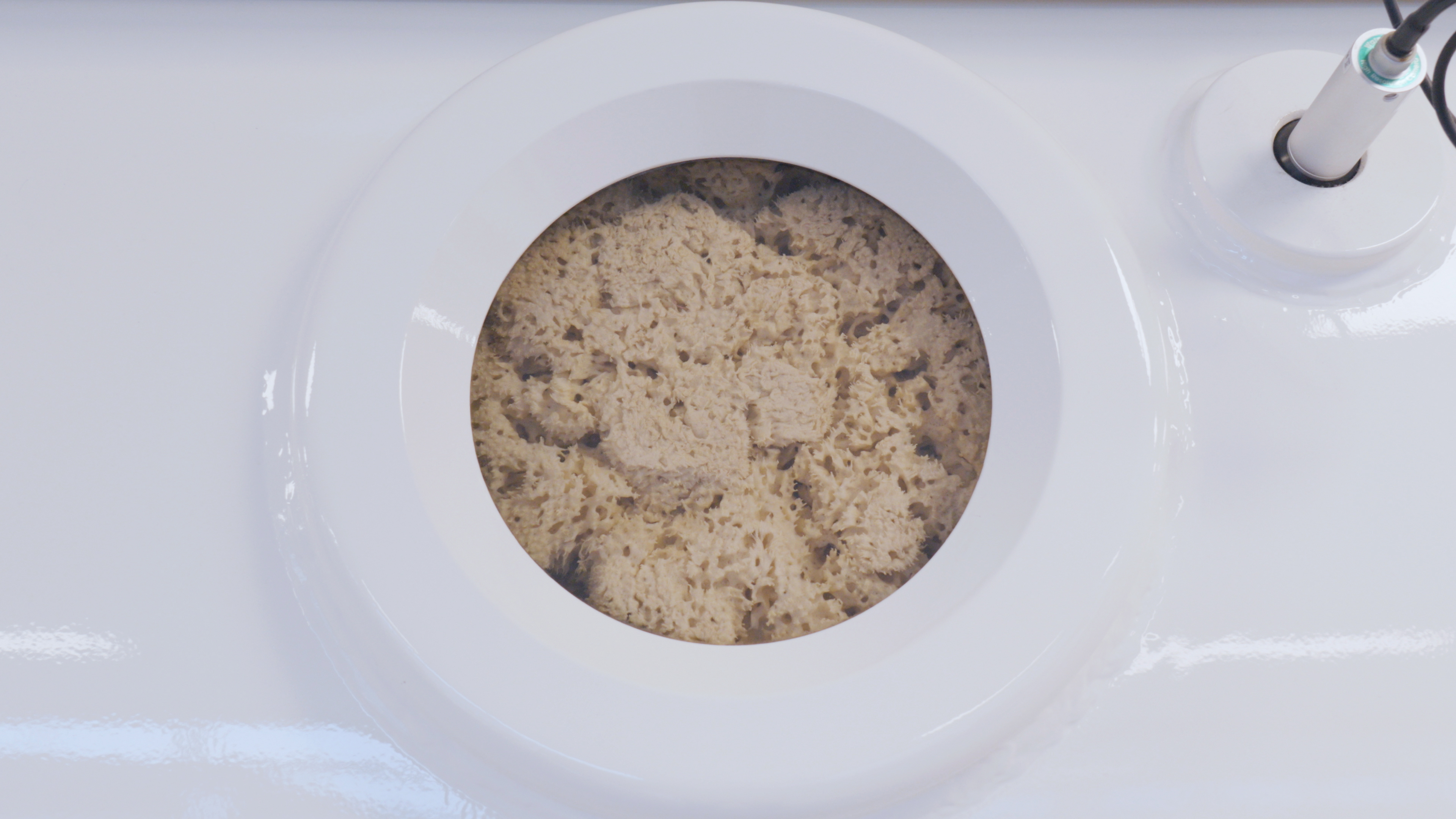
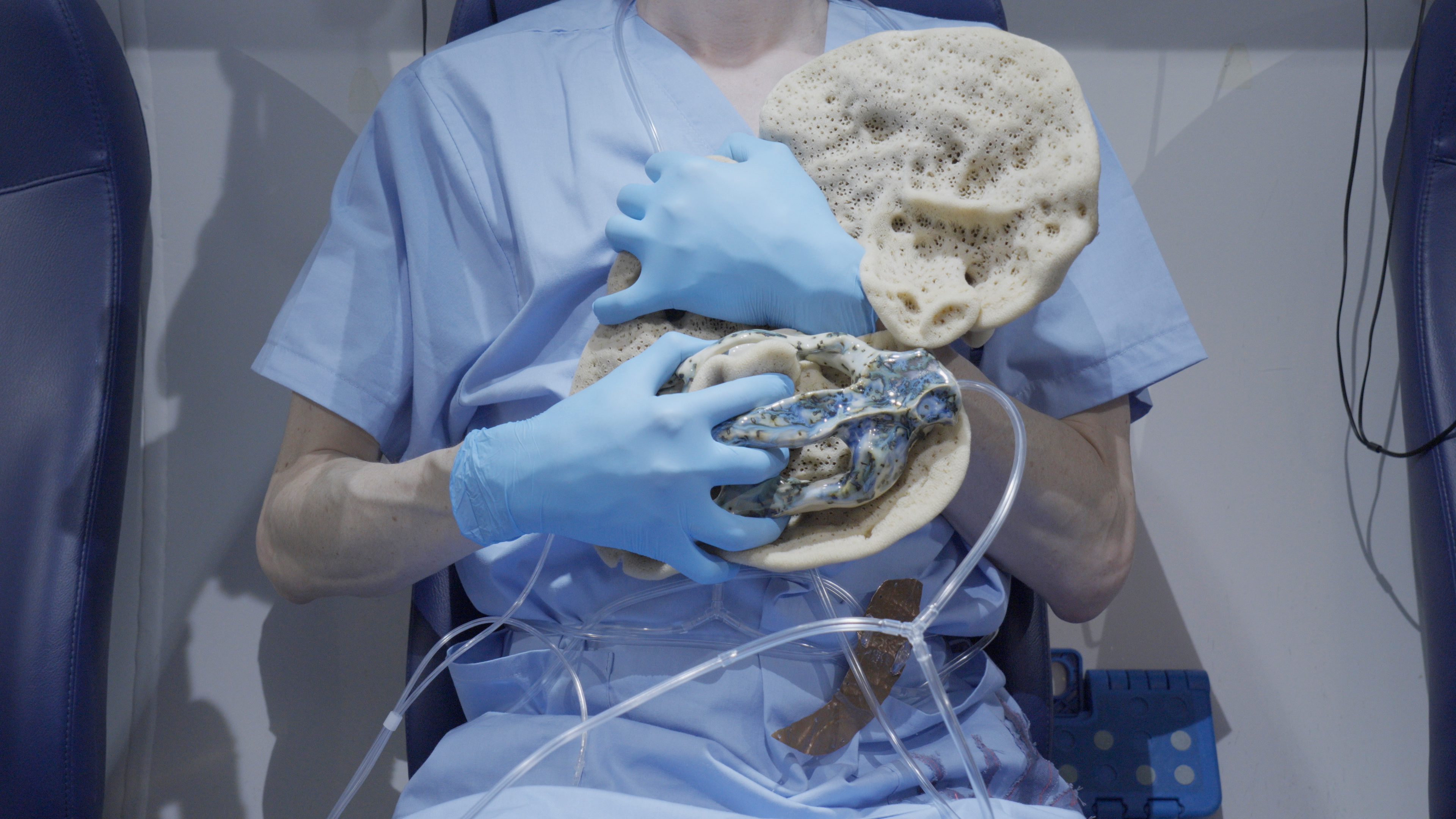
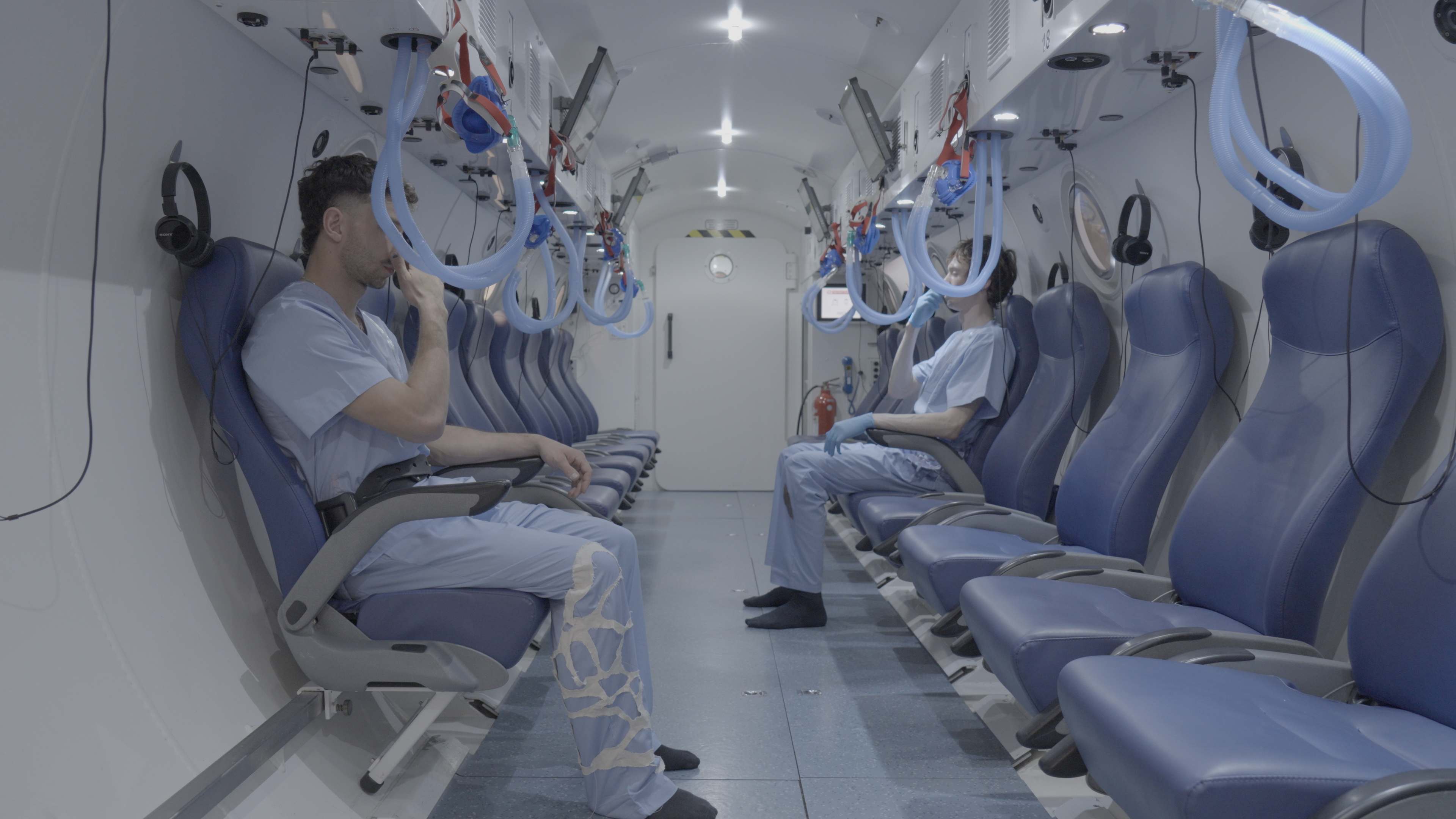
The Dance of the Mechanic (2026) is a diptych by artist and filmmaker Esther van der Heijden that explores how economic and bodily pressures converge in the history of sponge diving on the Greek island of Kalymnos. Combining archive footage, oral history, poetic sequences filmed inside a decompression chamber, and the traditional dance ‘Ο Χορός του Μηχανικού’, the film shows how new diving techniques transformed the profession while leaving a lasting impact on the bodies and lives of divers, as well as the wider community that depended on it.
(Ο Χορός του Μηχανικού: O Chorós tou Michanikoú)
split-screen film essay -/+ 12 minutes
installation: ceramics, copper piping, textile (silk, cotton, traditional embroidery from Greece, polyester), natural sponges, marble.
Supported by Amsterdams Fonds voor de Kunst (AFK) and het Mondriaan Fonds.
Exhibitions:
22 september 2026 - Leiden Essay Film Festival
27-29 march 2026 - Mondriaan Prospects 2026
24-26 october 2025 - De Bouwput Amsterdam (work in progress)
25 may 2025 - ISO Official Afterparty Art Week Amsterdam // Open Studios (work in progress)
Synopsis
The Dance of the Mechanic (2026) is a diptych by artist and filmmaker Esther van der Heijden that explores how economic and bodily pressures converge in the history of sponge diving on the Greek island of Kalymnos. Combining archive footage, oral history, poetic sequences filmed inside a decompression chamber, and the traditional dance ‘Ο Χορός του Μηχανικού’, the film shows how new diving techniques transformed the profession while leaving a lasting impact on the bodies and lives of divers, as well as the wider community that depended on it.
For centuries, Kalymnian sponge divers descended using only a weighted stone that helped them reach the seabed quickly. The introduction of the copper-helmeted diving suit in the nineteenth century radically altered their diving method. Equipped with surface-supplied air, divers could remain underwater for longer and reach greater depths, making previously inaccessible sponge grounds available for extraction. For many island families, this offered an essential source of income. Yet growing international demand for natural sponges and the industrialisation of the trade intensified the pressure to increase productivity, encouraging divers to push beyond the limits of their bodies. Many developed decompression sickness, leaving some permanently disabled and others unable to survive its consequences. The choreography of ‘Ο Χορός του Μηχανικού’, created in 1952 by Theophilos Klonaris, preserves the memory of a community shaped by this profession.
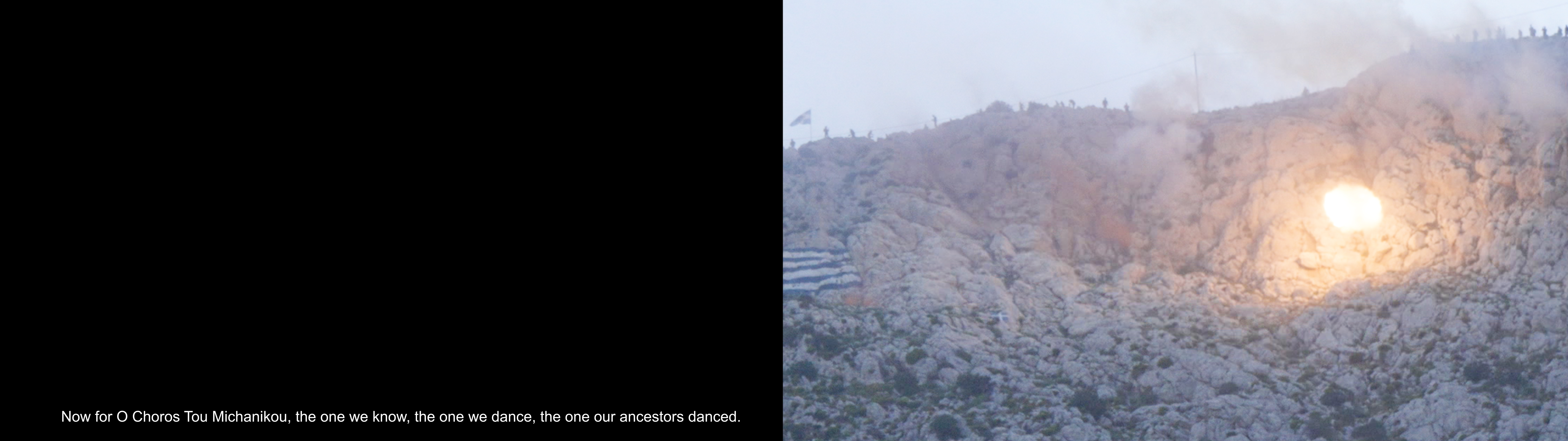
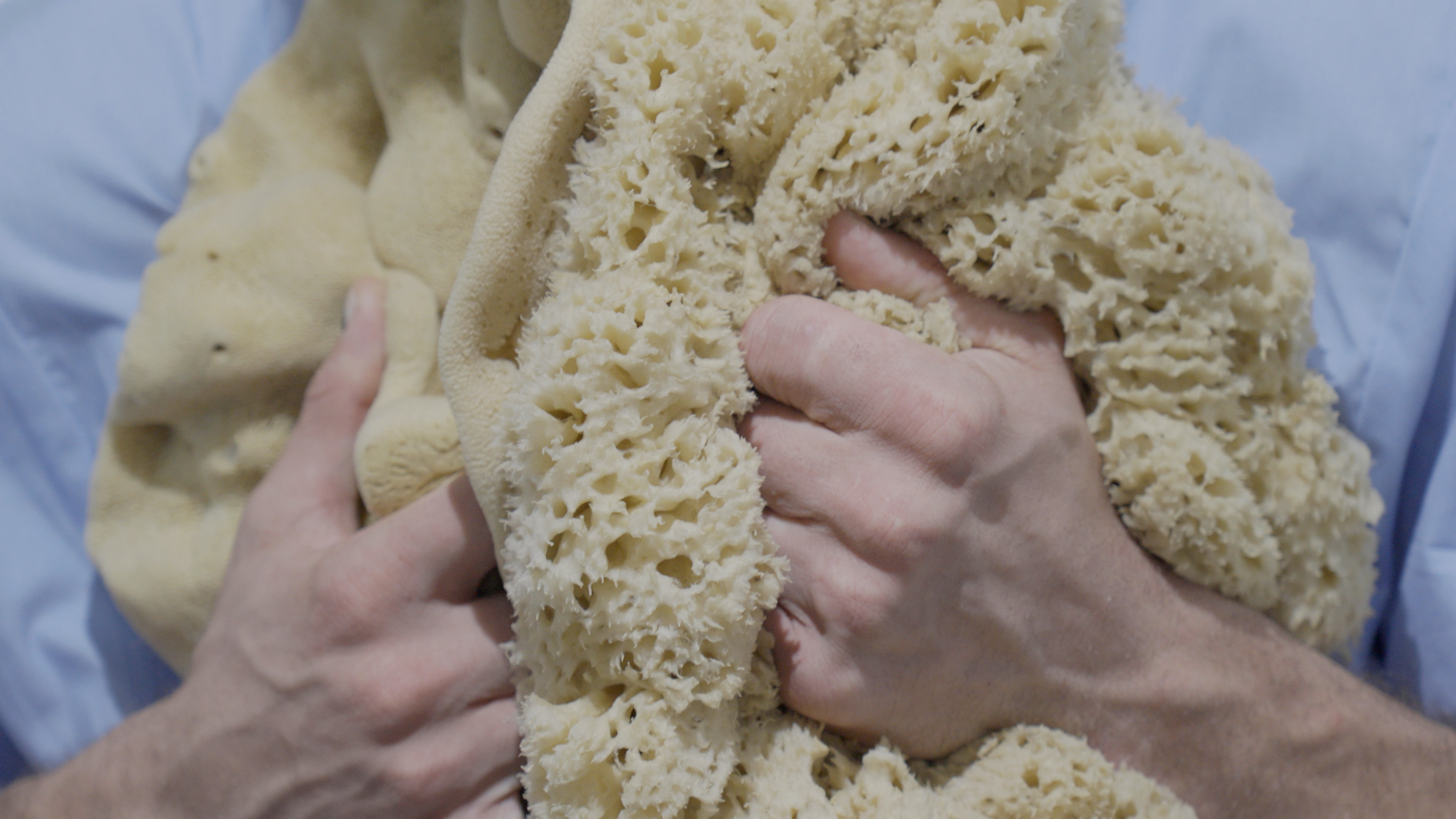
Through its split-screen composition, the film brings different times, bodies, and forms of pressure into dialogue, creating parallels and contrasts between the diver and the sponge, past and present, and the forces that shape them.
Through its split-screen composition, the film brings different times, bodies, and forms of pressure into dialogue, creating parallels and contrasts between the diver and the sponge, past and present, and the forces that shape them.
stills